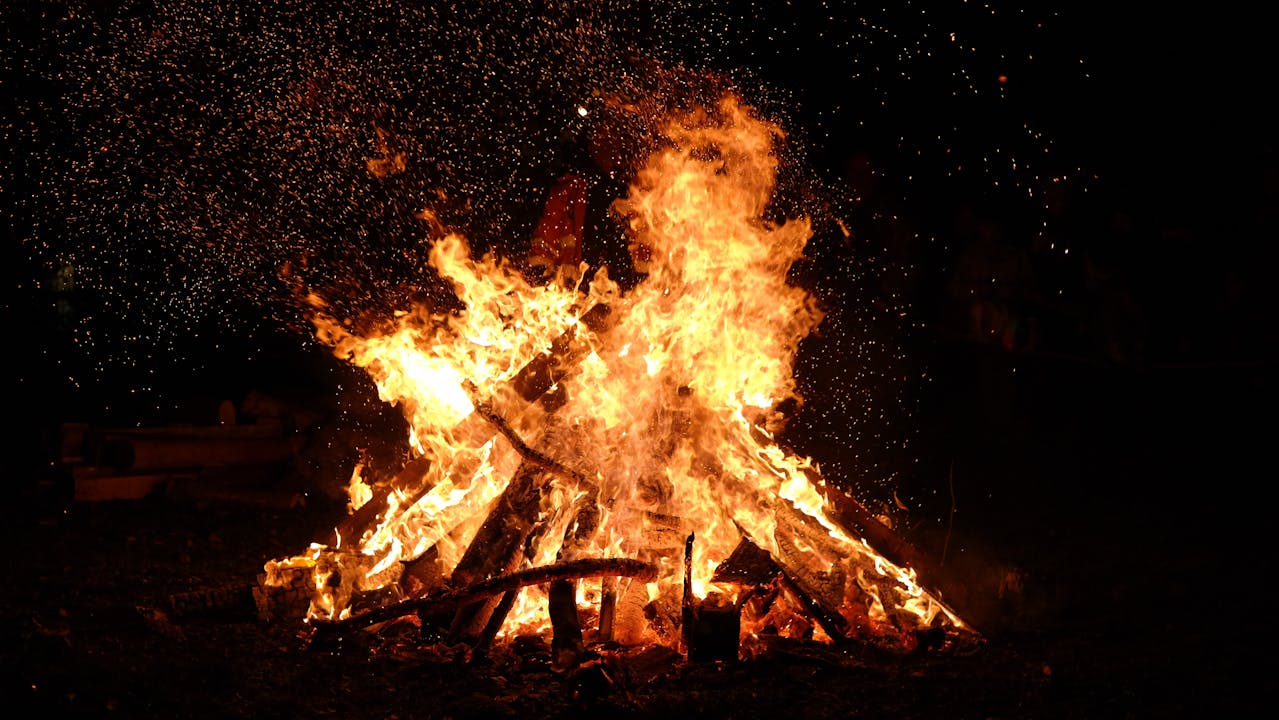
The Story of the Table and the Fire Pit
“Come sit with me,” Samuel said.
Daniel looked at the old man and smiled.
“I don’t have much time.”
Samuel pointed toward the long wooden table in the middle of the village.
“You always have time for the table.”
Daniel sat down.
The village was quiet that evening. Around them, people were sharing bread, passing bowls of food, laughing and talking. Children were running between the benches. An old woman was telling a story to two young boys. A young couple sat holding hands at the far end of the table.
Daniel looked around.
“Why is this table so important to everyone?”
Samuel smiled.
“Because, my boy, this is where we remember that we belong to one another.”
Daniel looked puzzled.
Samuel continued.
“Long ago, when this village was built, the people built the wall first. They built the embankment around it. They created one great entrance so they could protect the people inside.
“But then they built something in the centre.
“They built this table.”
“Why?”
“Because protection alone doesn’t make a community. People need somewhere to come together.”
Samuel picked up a piece of bread.
“At this table, people eat together. They celebrate births. They celebrate marriages. They mourn their dead. They welcome strangers. They make plans. They tell stories. They forgive each other.
“And most importantly, they listen.”
Daniel looked down at the table.
“And the fire pit?”
Samuel became quiet.
“You see that gate?”
Daniel nodded.
“Outside the gate is the fire pit.”
“I’ve seen it.”
“Everyone has.”
Samuel leaned closer.
“The fire pit is not where we live. It’s where we go when something in our lives needs to be confronted.”
Daniel frowned.
“What kind of things?”
“Anger. Betrayal. Fear. Grief. Things that are broken. Things we don’t know how to fix. Sometimes things we need to let go of.”
Daniel looked toward the fire.
“So why not just stay at the table and avoid all that?”
Samuel laughed softly.
“Because avoiding the fire doesn’t make the problem disappear.
“But neither does living there.”
Daniel remained silent.
Samuel continued.
“There was a young couple once. Their names were Daniel and Sarah.”
Daniel smiled.
“Like me?”
“Perhaps,” Samuel said.
“They loved each other very much. But they began hurting each other without realising it.
“Sarah felt that Daniel didn’t see her anymore. Daniel felt that Sarah never appreciated what he did for the family.
“They would come to the table, but instead of sharing a meal, they would bring their arguments with them.
“Eventually, they stopped listening.
“Every conversation became a battle.
“Every disagreement became about who was right.
“Then one night, Sarah said something that changed everything.
“She said, ‘I don’t think you see me anymore.’
“And Daniel replied, ‘After everything I do for you?’
“Neither of them heard the pain underneath the other’s words.
“So they walked outside the gate.
“They went to the fire pit.”
Daniel listened carefully.
“What happened?”
“They sat beside the fire.
“For a long time, neither spoke.
“Then Daniel said something he had never said before.
“He said, ‘I’m scared.’
“Sarah looked at him.
“She had expected anger.
“She had expected another argument.
“But instead, she heard fear.
“She asked him, ‘What are you afraid of?’
“And Daniel said, ‘That no matter what I do, I’ll never be enough for you.’
“Sarah began to cry.
“Then she said, ‘I’m scared too.’
“Daniel asked, ‘What are you afraid of?’
“And Sarah said, ‘That I’ll spend my whole life beside someone who doesn’t really see me.’”
Samuel paused.
Daniel looked toward the fire.
“So they realised they were both afraid?”
“Yes.
“And suddenly they weren’t enemies anymore.
“They were two people standing beside the same fire.”
Daniel asked quietly,
“Did they fix everything?”
“No.
“Not that night.
“But they discovered something more important.
“They discovered that the fire wasn’t the real problem.
“They had forgotten how to return to the table.”
Daniel looked at Samuel.
“What happened then?”
“They made a decision.
“They would go back.
“But they wouldn’t go back pretending nothing had happened.
“They would go back with honesty.
“With responsibility.
“With listening.
“With forgiveness.
“And with a willingness to change.”
Samuel looked around the village.
“That is what the people here learned over generations.
“We spend most of our lives at the table.
“We should.
“The table is where we build relationships.
“It is where we love.
“It is where we laugh.
“It is where we raise our children.
“It is where we share our lives.
“But sometimes we need to leave the table and walk to the fire pit.”
“Why?”
“To confront what is hurting us.”
“And then?”
“We sit beside the fire.
“We tell the truth.
“We listen.
“We take responsibility.
“We decide what needs to change.
“We decide what needs to be forgiven.
“We decide what needs to be released.”
Daniel looked at the flames.
“And then we go back?”
Samuel nodded.
“If we can.”
“What if we can’t?”
Samuel was quiet for a moment.
“Then sometimes the fire tells us something else.
“Sometimes we discover that something has to end.
“Sometimes a boundary has to be created.
“Sometimes someone has to walk away.
“But even then, we don’t throw everything into the fire while we’re angry.
“We stop first.”
“Why?”
“Because anger is a terrible place from which to make permanent decisions.”
Daniel smiled.
“You’ve been here a long time, haven’t you?”
Samuel laughed.
“Long enough to know that the fire is useful.
“But dangerous.”
He looked directly at Daniel.
“You know what the biggest mistake people make?”
“What?”
“They think the fire is the destination.
“It isn’t.
“The fire pit is a place of decision.”
Daniel looked at the long table behind them.
“And the table?”
“The table is where we belong.”
Samuel stood up.
“Come.”
“Where?”
“Back to the table.”
Daniel followed him.
As they walked through the village gate, Samuel stopped.
“Remember this, Daniel.”
“What?”
“When you’re angry, don’t decide what your whole relationship means.
“When you’re hurt, don’t burn everything.
“When you’re afraid, don’t attack the person standing beside you.
“Stop.
“Breathe.
“Listen.
“Look at the person beside you.
“And ask yourself one question.”
“What question?”
Samuel smiled.
“Is this something I really want to burn?”
They walked back to the table.
People were still eating.
Someone made room for Daniel.
Samuel sat beside him.
Daniel looked down the length of the table.
And for the first time, he understood.
The table wasn’t a place where people never disagreed.
It wasn’t a place where nobody ever got hurt.
It wasn’t a place where life was always easy.
The table was simply the place where people chose to remain connected.
And sometimes, when something became too painful to ignore, they would walk together to the fire.
But they knew the way back.
Because the oldest wisdom in the village was very simple:
“Live at the table.
Visit the fire when you must.
But don’t build your home beside the flames.”
And beneath those words, carved into the old wooden table, was one final sentence:
“Before you burn what you love, stop. Turn around. There is still a seat waiting for you.”
