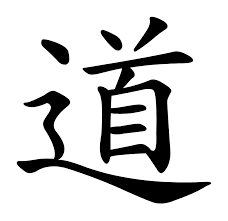
Here is the 25 most important verses from the Tao Te Ching, also known as the Lao Tzu, along with their explanations:
1. Tao Te Ching, Verse 1 – “The Tao that can be told is not the eternal Tao; the name that can be named is not the eternal name.” This verse introduces the concept of the Tao, suggesting that it’s beyond words and names.
2. Tao Te Ching, Verse 3 – “Not to honor men of worth will keep the people from contention.” This verse emphasizes the importance of humility and not seeking to elevate oneself above others.
3. Tao Te Ching, Verse 8 – “The highest good is like water. Water gives life to the ten thousand things and does not strive.” This verse illustrates the concept of wu-wei, or non-action, and the nourishing quality of water.
4. Tao Te Ching, Verse 15 – “Of old, those who were skilled in the Tao did not enlighten others, but kept themselves hidden.” This verse highlights the importance of humility and not seeking to draw attention to oneself.
5. Tao Te Ching, Verse 19 – “When the world recognizes beauty as beauty, ugliness arises. When it recognizes good as good, evil arises.” This verse warns against the dangers of dualistic thinking and the need to transcend opposites.
6. Tao Te Ching, Verse 22 – “To yield is to be preserved whole. To be bent is to become straight. To be empty is to be full. To be worn out is to be renewed.” This verse illustrates the concept of embracing change and finding strength in flexibility.
7. Tao Te Ching, Verse 25 – “There is something formless yet complete, born before heaven and earth.” This verse describes the Tao as the ultimate reality, beyond form and time.
8. Tao Te Ching, Verse 27 – “Know the masculine, yet keep to the feminine. Become the valley of the world, and virtuous without effort.” This verse emphasizes the importance of balancing opposites and embracing the feminine principle.
9. Tao Te Ching, Verse 30 – “He who knows how to stand still, stands still on the foundation of the universe.” This verse illustrates the concept of finding stillness and stability in a constantly changing world.
10. Tao Te Ching, Verse 32 – “The Tao is always nameless, yet it is the source of all things.” This verse reiterates the concept of the Tao as the ultimate reality, beyond names and forms.
11. Tao Te Ching, Verse 34 – “All things depend on it for their production, yet it does not lord it over them.” This verse describes the Tao as the source of all things, yet it does not dominate or control them.
12. Tao Te Ching, Verse 36 – “To be soft and weak is to be the disciple of life. To be hard and strong is to be the disciple of death.” This verse highlights the importance of embracing softness and flexibility in order to thrive.
13. Tao Te Ching, Verse 40 – “Reversal is the movement of the Tao. Weakness is the function of the Tao.” This verse illustrates the concept of reversal and the importance of embracing weakness and humility.
14. Tao Te Ching, Verse 42 – “The Tao gives birth to one. One gives birth to two. Two gives birth to three. Three gives birth to the ten thousand things.” This verse describes the process of creation and the unfolding of the universe.
15. Tao Te Ching, Verse 45 – “Who is content, needs not be ashamed. Who is self-fulfilled, needs not be proud.” This verse emphasizes the importance of being content and self-fulfilled, rather than seeking external validation.
16. Tao Te Ching, Verse 50 – “Men come forth and return, yet do not know the Gate from which they came.” This verse describes the cycle of life and death, and the importance of understanding the mysterious Gate of creation.
17. Tao Te Ching, Verse 53 – “If I had but little knowledge, I should be a careful walker on the simple way. But I have more knowledge, so I am troubled.” This verse highlights the dangers of having too much knowledge and the importance of simplicity.
18. Tao Te Ching, Verse 56 – “He who knows does not speak. He who speaks does not know.” This verse warns against the limitations of language and the importance of silence and non-action.
19. Tao Te Ching, Verse 60 – “Ruling the state is like cooking a small fish. Too much interference will spoil it.” This verse illustrates the concept of gentle and subtle leadership, avoiding excessive interference and control.
20. Tao Te Ching, Verse 62 – “The world is a sacred vessel, which cannot be changed or improved. If you try to change it, you will ruin it.” This verse warns against the dangers of trying to control or manipulate the world, and the importance of embracing its natural order.
21. Tao Te Ching, Verse 64 – “A tree that is unbending is easily broken. The hard and strong will fall, the soft and weak will overcome.” This verse highlights the importance of flexibility and yielding in order to overcome adversity.
22. Tao Te Ching, Verse 67 – “I have three treasures: simplicity, patience, and compassion. These three are your greatest treasures.” This verse emphasizes the importance of simplicity, patience, and compassion as essential virtues for living in harmony with the Tao.
23. Tao Te Ching, Verse 70 – “My teachings are easy to understand and easy to practice, yet no one can understand them, and no one can practice them.” This verse highlights the simplicity and accessibility of the Taoist teachings, yet notes that they are often difficult to understand and practice.
24. Tao Te Ching, Verse 74 – “The sage is guided by circumstance, and is not controlled by his own ego.” This verse illustrates the concept of the sage as one who is guided by the natural order of the universe, rather than by personal desires or ego.
25. Tao Te Ching, Verse 81 – “True words are not beautiful. Beautiful words are not true. The good man does not argue. The arguer is not good.” This verse warns against the limitations of language and the dangers of argumentation, emphasizing the importance of simplicity and authenticity.